Partnership for Safety and Justice is Oregon’s leading public safety and criminal justice reform organization. Together with advocates like you, we advance public safety solutions that invest in accountability and healing — not isolation and punishment — so that people can recover from trauma, families can safely stay together, and communities can thrive.
How We Are Building Community Safety
Our work involves more than reforming the system. We are transforming how society understands what people need after crime, violence, and trauma. This aim is especially vital for communities of color that have been most harmed and least helped by our systems.
We are building community safety using three approaches:
Building Power: Leadership from grassroots to grasstops
Transforming the System: Advancing and implementing state and local reforms
Changing the Narrative: Stories and voices leading the way
“Partnership for Safety and Justice really opened my eyes to the ways in which our criminal justice system works and doesn’t work — the ways in which so many people affected by the criminal justice system are both survivors of crime and folks who might commit crime as well.”
We envision a public safety system that values…
Healing over handcuffs
Oregonians deserve stable housing, addiction treatment, and mental health care. Instead of arresting and jailing people who are suffering, we fight for real solutions like housing and healing services.
Accountability for harm
Crime survivors deserve meaningful accountability — not punishment-only approaches that don’t create true community safety. We advocate for programs that prevent violence, repair harm, and help people heal.
Racial justice and equity
Black, Brown, and Indigenous people have been most harmed and least helped by the system. The solutions we advance are rooted in racial justice to ensure that all of our communities feel safe.
Crime survivors’ voices
Many victims don’t turn to the criminal justice system for help, especially Black and Brown victims whose communities are disproportionately targeted by the system. We ensure that survivors have greater access to restoration and healing.
Keeping families together
Most Oregonians who are incarcerated are parents, which causes childhood trauma that reverberates into adulthood. By investing in solutions that keep families together, we foster bonds that make our communities safer.
Honoring Our Roots
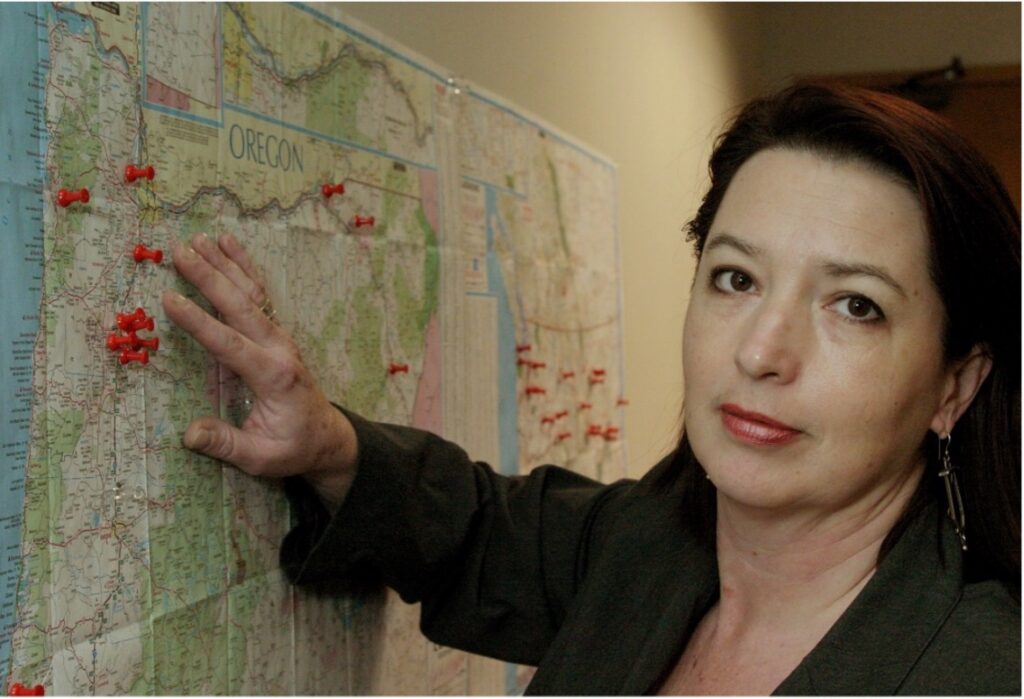
The Western Prison Project was founded in 1999 by Brigette Sarabi, a lifelong activist, organizer, survivor of violent crime, and a mother whose child had been recently incarcerated.
When Brigette tried to support her child’s path to accountability and repair the harm, she found that the system was designed to punish and isolate, not help and heal. She and a handful of community members and activists began organizing to advocate for criminal justice reform and support incarcerated people, including their loved ones. From there, the Western Prison Project was formed.
Brigette Sarabi
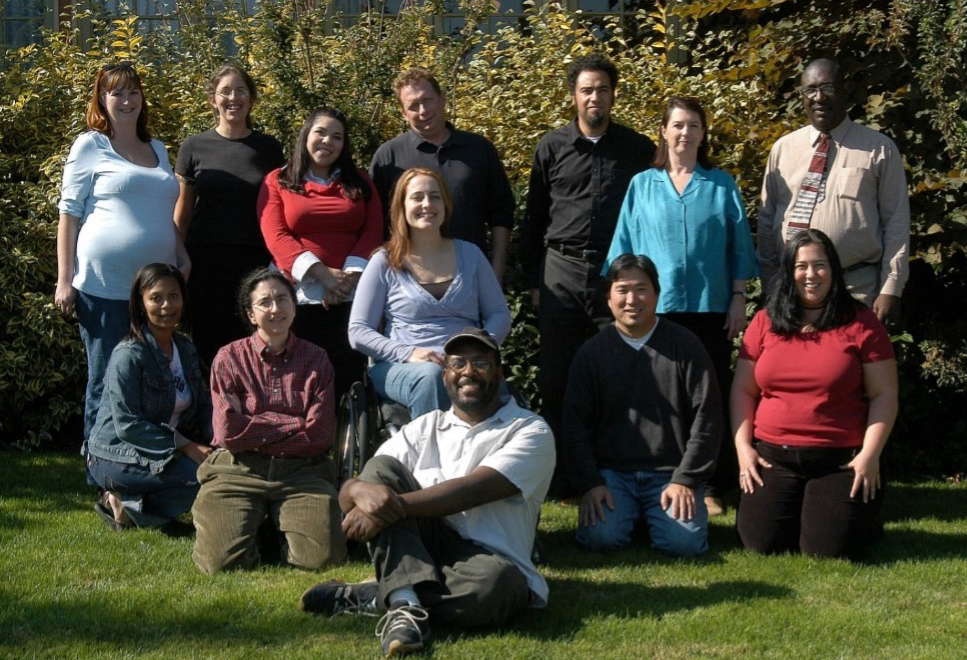
Partnership for Safety and Justice's earliest board and staff. Back row (L to R): Maddy Dennis-Perez, Caylor Roling, Cassandra Villanueva, Geoff Sugerman, David Rogers, Brigette Sarabi, Danny Bell. Middle Row (L to R): Taneisha White, Kathleen Pequeño, Arwen Bird, Scot Nakagawa, Anita Rodgers. Front: Anthony Davis.
At the same time, Arwen Bird was deeply engaged in crime survivor advocacy after surviving a car crash caused by someone who chose to drink and drive.
Arwen saw a criminal justice system that was more focused on punishment than on helping survivors like herself heal and rebuild their lives. Recognizing the critical need for an alternative voice, Arwen founded Survivors Advocating for an Effective System (SAFES), where survivors advocated for more effective solutions, including accountability, restoration, racial justice, and healing.
In 2004, SAFES joined forces with Western Prison Project to become Partnership for Safety and Justice.
Partnership for Safety and Justice was the first organization in the country where survivors of crime, people convicted of crime, and the families of both came together to fight for more effective public safety solutions to harm and violence.
Meet the Team
Our leadership, staff, and board members guide our vision, strategize our work plans, and implement our programs.
By signing up for our newsletter, you’ll learn about policies we’re working toward, events near you, and ways you can take action and make your voice heard.